
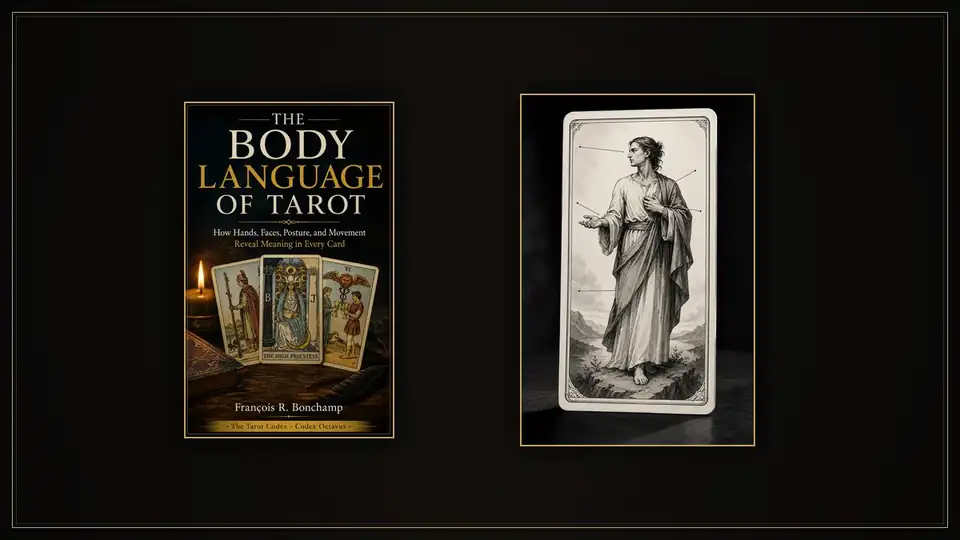
Before human beings developed complex written alphabets, they communicated through posture, physical tension, eye contact, and somatic gesture. The human nervous system is biologically wired to read the body language of another person in a fraction of a second. In tarot reading, this somatic literacy is your most immediate and dependable interpretive tool.
In The Tarot Codex, Codex VIII, The Body Language of Tarot, teaches readers to treat the illustrated figures in the deck not as decorative paper cutouts, but as living bodies responding to psychological, emotional, and spiritual pressures. The body cannot lie. When a reader learns to mirror the physical posture of a card's figure in their own body, the emotional truth of the situation becomes immediately accessible without consulting a single memorized note.
The Three Fundamental Bodily Postures
Every human or humanoid figure in tarot adopts one of three core structural postures:
1. The Seated Posture (Sovereignty, Stillness, or Entrapment)
When a figure is seated (such as the Emperor, the High Priestess, or the Four of Pentacles), they are rooted to a specific spot. They are not in motion; they are holding space, governing, meditating, or refusing to move.
- Open Seated Posture: Upright spine, arms relaxed on armrests, chest exposed (e.g., King of Cups, Justice). This signifies calm sovereignty, emotional containment, and fair governance without defensiveness.
- Guarded Seated Posture: Arms tightly clutching an object to the chest, head pulled down into shoulders, legs locked together (e.g., Four of Pentacles). This reveals acute defensiveness, fear of loss, emotional stinginess, and somatic rigidity.
- Collapsing Seated Posture: Head buried in hands, upper body folded forward (e.g., Nine of Swords). This indicates acute mental agony, shame, grief, or complete exhaustion of the nervous system.
2. The Standing Posture (Agency, Confrontation, or Vigilance)
Standing figures are engaged with their environment. They possess immediate kinetic potential: they can turn, fight, step forward, or flee.
- The Balanced Stance: Feet planted shoulder-width apart, weight evenly distributed (e.g., Magician, Temperance). One foot may rest on land and one in water. This signifies equilibrium between conscious and unconscious forces, grounded agency, and poised readiness.
- The Defensive Stance: Weight shifted onto the back leg, torso turned sideways to present a smaller target, staff held across the body (e.g., Seven of Wands, Nine of Wands). This indicates holding boundaries against overwhelming odds, chronic vigilance, and battle fatigue.
- The Striding Stance: One foot clearly ahead of the other, torso leaning forward (e.g., Eight of Wands, Page of Swords). This represents decision, forward momentum, and active pursuit.
3. The Kneeling or Prostrated Posture (Humility, Devotion, or Defeat)
When a figure drops their center of gravity to the ground, they have surrendered independent standing authority.
- Kneeling with Reverence: One or both knees on the earth, hands offering or receiving (e.g., the youth in Six of Cups, the woman pouring water in the Star). This represents deep devotion, service, emotional vulnerability, and connection to the sacred earth.
- Prostration: Flat on the stomach (e.g., the figure in the Ten of Swords). The physical body has reached the end of its capacity. There is nowhere left to fall; the ordeal has concluded.
The Language of Hands and Arms
The arms and hands are the instruments of human will, relationship, and boundary. As detailed in our study of hands in tarot cards, pay close attention to hand dynamics:
- Open Palms Facing Upward: Receptivity, offering, blessing, vulnerability, and having nothing to conceal.
- Closed Fists or Clenched Grips: Holding tightly to power, fear of scarcity, anger, or white-knuckled control.
- Pointing Fingers: Directing attention, commanding obedience, or casting blame and judgment.
- Crossed Arms: Severe personal boundary, refusal to receive input, emotional withdrawal, or defensive self-soothing.
Head Tilt and Neck Alignment
The angle of the head reveals the figure's relationship to their own thoughts:
- Head Tilted Upward: Looking to the heavens, idealism, spiritual hope, or disconnection from earthly realities.
- Head Bowed Downward: Introspection, mourning, deep shame, humility, or intensive focus on physical craftsmanship.
- Head Turned Over the Shoulder: Looking backward while walking forward (e.g., Five of Swords). This is the somatic signature of paranoia, guilt, looking for pursuit, or second-guessing an achieved victory.
The Somatic Exercise for Readers
When you are struggling to interpret a card during a reading, push your chair back and physically mirror the figure’s exact posture. Adopt their spine alignment, match their hand position, direct your gaze in their direction, and take three deep breaths. Notice what feelings, muscular tensions, and thoughts arise naturally. Your own body will tell you what the card means before your intellect finishes searching for a keyword.